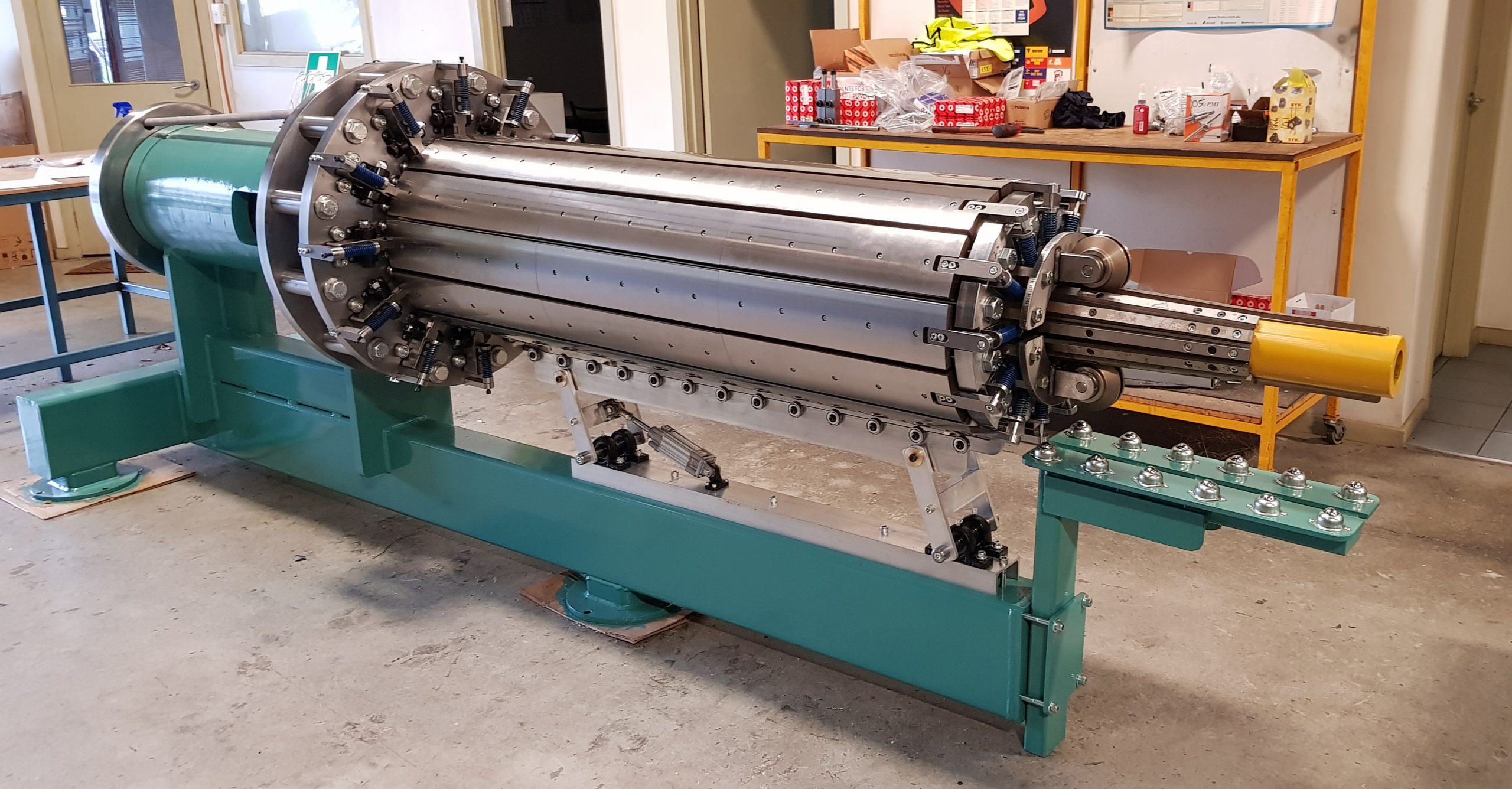
Streamline industrial operations with industrial automation services by Semtool Engineering in Melbourne, designed for precise PLC-based control.
Industrial manufacturing environments rely on precision, consistency, and real-time control to remain competitive. Industrial automation services support this requirement by enabling intelligent control of machinery, processes, and production workflows. Programmable logic controller (PLC) programming strengthens automation frameworks by delivering stable, scalable, and repeatable operational control.
Industrial Automation Systems Supporting Modern Manufacturing
Industrial automation systems replace manual interventions with software-driven control, improving reliability and process consistency across production lines. PLC-controlled environments allow machines, sensors, and actuators to operate within clearly defined logic structures that maintain predictable operational outcomes.
Automation platforms also support integration with supervisory systems, safety controls, and performance monitoring tools. This integrated approach improves system visibility, reduces operational risk, and supports compliance across complex manufacturing facilities.
PLC Programming Within Industrial Automation Services
PLC programming establishes the logical framework that governs machine behaviour and process sequencing. Within industrial automation services, PLCs function as the core processing layer, executing control instructions based on sensor inputs, timing parameters, and defined operational thresholds.
Well-structured PLC programs improve fault tolerance, simplify diagnostics, and support long-term system maintainability. Standardised programming methodologies also ensure automation systems remain adaptable as production requirements evolve.
How PLC Integration Improves Production Efficiency
PLC-driven automation directly influences productivity by streamlining control logic and reducing human error. The following areas demonstrate measurable efficiency gains:
• Process Synchronisation: PLCs coordinate multiple machines through timed logic and interlocks, ensuring equipment operates in precise sequences that reduce bottlenecks and unplanned idle periods.
• Cycle Time Reduction: Optimised PLC programs refine machine timing and task execution, enabling faster production cycles while maintaining dimensional accuracy and quality tolerances.
• Fault Detection: Embedded diagnostics and real-time monitoring allow PLC systems to detect abnormal operating conditions early, supporting rapid corrective action before faults escalate into costly downtime.
• Repeatable Accuracy: Automated control logic delivers consistent process execution across repeated cycles, ensuring uniform outputs in high-volume manufacturing environments with minimal variation.
• Scalable Control: Modular PLC architectures support system expansion by allowing additional equipment and functions to be integrated without disrupting existing control structures.
Engineering Practices for Reliable PLC Automation
Effective PLC implementation depends on disciplined engineering design and structured system-level planning. Within advanced industrial automation services, several technical considerations influence long-term system performance:
• I/O Mapping Strategy: Structured allocation of inputs and outputs improves commissioning efficiency and simplifies future system modifications.
• Redundancy Design: Fail-safe configurations maintain operational continuity during component or communication failures.
• Network Architecture: Industrial Ethernet protocols enable secure, deterministic communication between PLCs, HMIs, and field devices.
• Standards Compliance: Control systems align with Australian electrical and machinery safety requirements, supporting regulatory compliance.
• Lifecycle Support: Version control, technical documentation, and structured backups preserve system integrity throughout the automation lifecycle.
Advancing Reliable Industrial Automation Outcomes
PLC-integrated automation enables manufacturers to optimise workflows, minimise downtime, and maintain stable production under demanding operating conditions.
At Semtool Engineering, we design and deliver industrial automation services that integrate PLC programming with robust industrial control systems for complex manufacturing environments. Our approach supports scalable production improvements through reliable, compliant automation outcomes.
Contact us to implement engineered industrial automation solutions that improve production efficiency.
Related Blog Article: PLC Control Design by Semtool Engineering for Cutting-edge Automation Solutions